
You know the feeling: you’re reading a student’s report on the digestive system and the writing is so slick, so perfectly structured, that you almost want to frame it. But something nags at you. This isn’t how that student speaks in class. Where are the odd turns of phrase, the muddled explanations, the flashes of personality you hear in discussions? For a moment, you wonder if the best-written essays in your pile might actually reveal the least about what your students truly understand.
When Immaculate Writing Feels Off: The Teacher’s Sixth Sense
Spotting the Disconnect: A Familiar Classroom Moment
It happens more often now than we’d all care to admit. You pick up a Year 8 science write-up from a pupil who, last week, struggled to explain osmosis verbally. The assignment in your hands? It wouldn’t look out of place in a GCSE revision guide. Every paragraph is tightly organised. Technical terms are defined with textbook precision. There are no spelling mistakes, no awkward transitions. And yet, you remember the hesitant hand that wrote it and think, “Did this really come from them?”

Why Polished Doesn’t Always Mean Proficient
The uncomfortable truth is that polish and proficiency are no longer guaranteed bedfellows. In a world where students can lean on AI, online templates, and a bevy of model answers, it’s easier than ever to produce immaculate reports that mask patchy understanding. The real challenge now isn’t just to assess what’s on the page, but to read between the lines: is this their thinking, or just their formatting?
The New Reality: AI, Templates, and the Illusion of Mastery
How Students Are Outsourcing Their Thinking
It’s not just the occasional student copying from Wikipedia anymore. With AI tools like ChatGPT just a browser tab away, students can produce paragraphs of seamless, technically correct writing with barely a pause. Many don’t see it as cheating, but as part of “good study skills.” The danger? When the process of wrestling with an idea, struggling to explain it, and finally getting it right is replaced by a quick copy-paste or a prompt to a chatbot, the vital cognitive work that builds real understanding is quietly skipped.
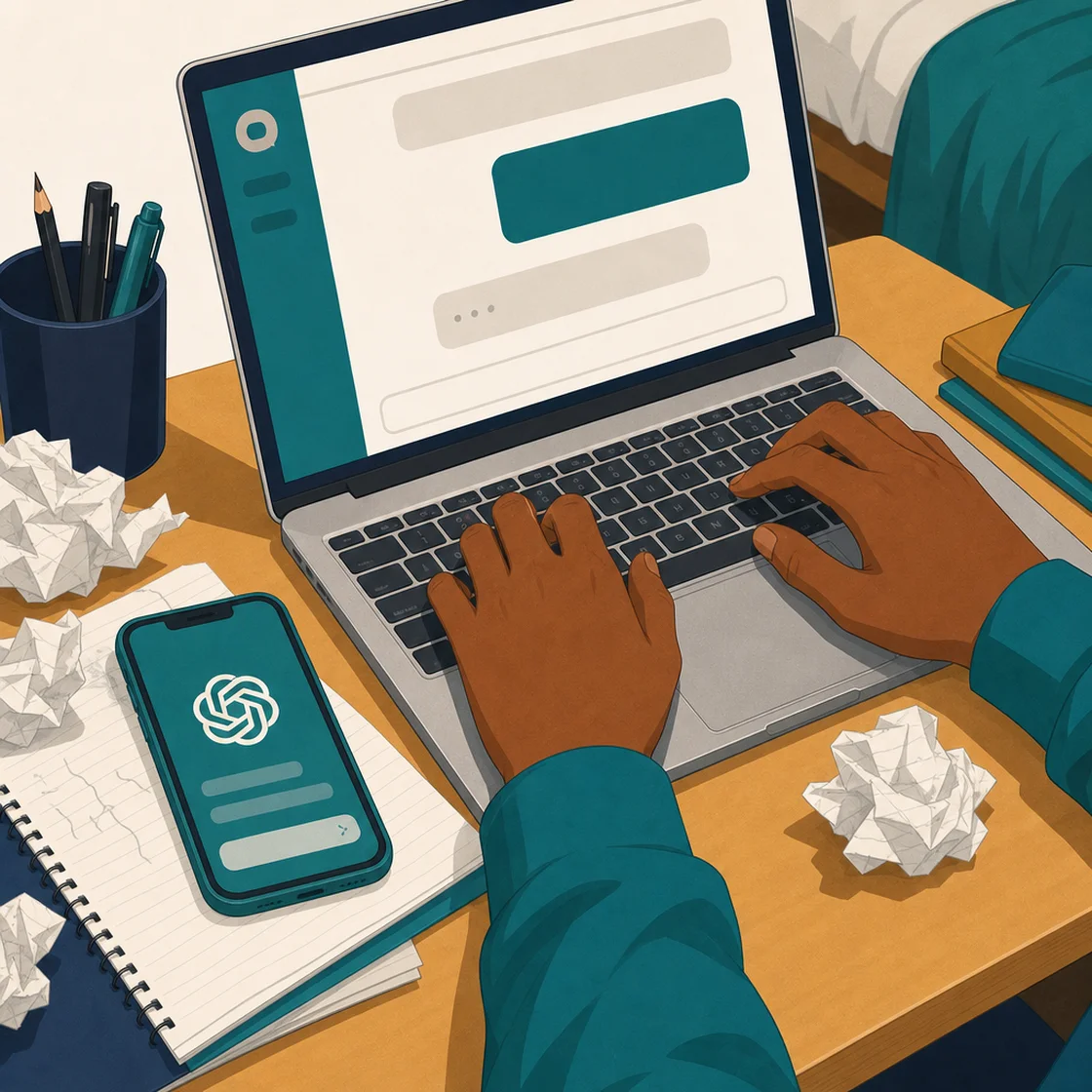
Tip: A landmark MIT Media Lab study found students using LLMs (like ChatGPT) showed the weakest brain connectivity compared to those using search engines or nothing at all. And a RAND survey of 1,200 students found two-thirds believed AI was harming their critical thinking.
The Limits of Surface-Level Assessment
When a student hands in a flawless report, it’s tempting to tick the “exceeds expectations” box and move on. But if our assessment stops at surface features - grammar, structure, spelling - we risk rewarding those who are best at using tools, not those who are best at grappling with concepts. At worst, we might miss students who are quietly losing the ability to think for themselves, relying instead on machines to do their heavy lifting.
Why It Matters: The Consequences of Mistaking Fluency for Understanding
From Box-Ticking to Critical Thinking: What’s at Stake
It’s not just about catching out the odd shortcut. When we conflate polished writing with genuine learning, we send a message: looking good on paper is what counts. This breeds a culture of box-ticking, where original thought takes a back seat to whatever will scan as “correct.” The cost? Students never develop the grit to stick with a tough problem, the curiosity to ask good questions, or the confidence to risk a messy answer.

Save Hours on Report Writing
Report Alchemy generates personalised, high-quality student reports in seconds.
Try Report Alchemy FreeLong-Term Risks for Students and Schools
We all know the panic of report deadlines, but the bigger worry is the long-term effect. If students repeatedly bypass the “struggle zone,” they may enter exams, further education, or the workplace without the habits of mind that underpin success: the willingness to make mistakes, to self-correct, and to explain their reasoning. For schools, it risks undermining progress data and making it harder to spot who actually needs support. For parents, it creates a false sense of security - a glossy report that says “all is well” when, beneath the surface, foundational skills are eroding.
How to Tell: Practical Clues That Real Learning Is Missing
Language Mismatches and Sudden Skill Leaps
One of the first red flags is a sudden leap in writing style. A Year 7 pupil who usually writes, “Plants need water to live,” suddenly hands in, “Photosynthesis is a complex biochemical process whereby plants convert solar energy into glucose and oxygen.” If you’ve never heard them use words like “biochemical” in discussion, question where the leap came from.
Superficial Content and Generic Analysis
Look out for work that covers all the right topics but never gets specific. You’ll see sweeping phrases like, “It is important to consider different perspectives,” or, “In conclusion, teamwork is valuable in many situations.” These statements sound impressive but rarely reference anything personal, local, or specific to the class’s actual experience.
Inconsistent Voice Across Tasks
Authentic student writing has quirks: the odd metaphor, a favourite turn of phrase, mistakes that repeat across subjects. If a student’s report reads like it was produced by someone else - or worse, sounds identical to several others in the class - that’s a sign they may be borrowing more than just inspiration.
| Genuine Understanding | AI-Assisted Polished Writing |
|---|---|
| “When we did the bread mould experiment, I was surprised that the bread with no bag grew mould the fastest. I think it’s because it got more air, but I’m not sure if that’s right.” | “The experiment conclusively demonstrated that increased exposure to air accelerates mould growth, as evidenced by the unbagged bread’s rapid deterioration.” |
| Personal references to class activities or confusion Admission of uncertainty Unique phrasing and mistakes |
Generalised statements Perfect grammar and structure Formal, detached language |
|
Sophie asks thoughtful questions and explains her ideas, even when she’s unsure. Her writing shows her thinking process, especially when she discusses results that surprised her.
|
Sophie’s work is always well-organised and uses scientific vocabulary accurately. Her reports are consistently detailed and clear.
|
Beyond the Page: Strategies to Uncover True Student Thinking
Mini-Conferences and Oral Explanations
To get behind the polish, make time for five-minute conversations. Ask a student to talk you through their report - where did their ideas come from? What confused them? If they can’t explain it in their own words, you know the writing isn’t theirs. These mini-conferences often reveal more in a few sentences than a whole page of text.
Low-Stakes Writing and Process Journals
Encourage students to keep rough notes, jot down questions, or write quick reflections mid-topic. In these informal spaces, you’ll see the real gaps and the “aha” moments. It’s here that you find, “I thought enzymes were alive, but now I know they’re not. Still a bit confused about how they work, though.” Authenticity lives in the margin notes, not the final draft.
Questioning Techniques That Go Deeper
When marking, ask for simple explanations: “Can you tell me in your own words what this means?” or, “What would you say to a Year 4 pupil about this idea?” Probe for examples that are local and personal: “Was there a moment in our practical work when something surprised you?” These questions can’t be answered by AI or recycled from templates - they demand real engagement.
Consider this before-and-after:
Before: Tom, a quiet student, submits a string of immaculate but generic history essays. Every sentence is correct, but you never see his personality or hear the hesitation you know from class.
After: After a few weeks of process journals and regular one-to-one chats, Tom’s work changes. He writes, “I found it strange that Henry VIII changed his mind so much. I used to think kings always got what they wanted, but the video we watched showed he was actually quite desperate at times.” Suddenly, the writing isn’t just correct - it’s alive, and it’s his.
Fostering and Reporting Real Learning in an Age of AI
Designing Assessments That Prioritise Process Over Polish
Assessments that value the journey as much as the destination prompt students to show their working. Ask for drafts, annotated diagrams, or “thinking aloud” voice notes. Reward risk-taking and honest confusion: it’s better to see a student wrestle with an idea than to see a perfect answer lifted from somewhere else. At Report Alchemy, we’ve seen that the best teacher comments often reference not only what the pupil knows, but how they got there - mistakes, corrections, and all.
Transparent Reporting: Sharing the Learning Journey with Parents
When writing reports, consider including examples of process, not just outcomes. A comment like,
And if you dread report time because you want to capture real progress but end up defaulting to generic lines, tools like Report Alchemy can help. They give you a starting point, but crucially, they also let you personalise comments, highlight process, and reflect your students’ real journeys - saving you hours without sacrificing authenticity.
Conclusion: Shifting from Polished Products to Authentic Progress
Reframing Success in Your Classroom
It’s tempting to celebrate the most perfect-looking work. But in this new era, the courage to let students show their messy, unfinished thinking is something worth valuing. The best progress you’ll see isn’t always in the neatest reports, but in the moments when a child says, “I thought I understood this, but now I see I need to ask more questions.”
Your Role in Setting the New Standard
As teachers, we’re the last line of defence against a world obsessed with appearances. Our job isn’t just to check boxes, but to nurture thinkers - students who can wrestle with uncertainty, justify their thinking, and own their mistakes. That means reading between the lines, asking deeper questions, and reporting on the learning process as much as the finished product. And when the marking pile feels endless, remember: every tweak you make towards authentic assessment is a step towards a classroom where real learning is visible, valued, and celebrated.
This article was inspired by recent reporting from The Conversation.