
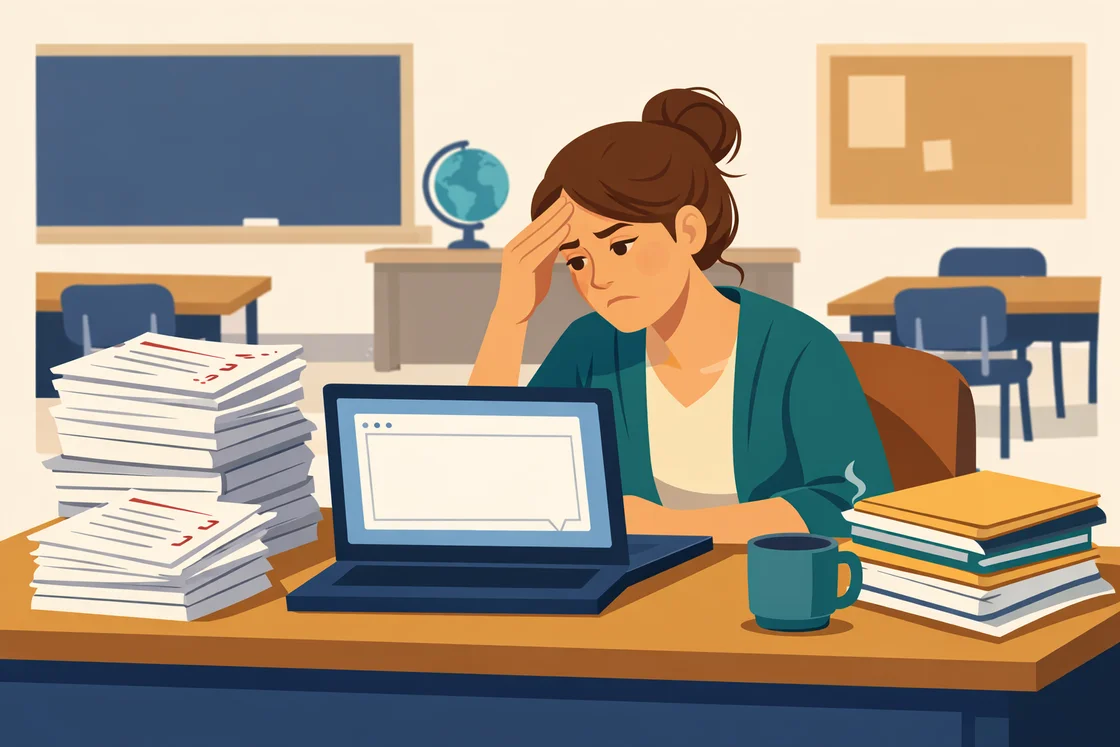
A student in your class can debate the finer points of a scientific hypothesis with their partner, but when you flick through their quiz, all you see are half-formed sentences and shaky diagrams. You know they understand more than the paper shows. Yet, when report-writing season rolls around, you are left staring at a blank box, wondering how to capture what actually matters. If you have ever felt that tension between what you witness in your classroom and what ends up “counting” as evidence, you are not alone.
The Assessment Struggle: When Tests Don’t Tell the Whole Story
The Limitations of Traditional Assessments
For all the hours we spend crafting quizzes, end-of-unit tests, and even “creative” project rubrics, there are always those students whose real skills never seem to fit the boxes. The pupil who can troubleshoot an experiment, or the group that negotiates their way out of a dead end in a practical task - these moments are the heartbeat of learning, but they rarely leave a mark in the gradebook. Instead, we are left with a stack of papers filled with regurgitated definitions and formulae, and somehow, the most memorable classroom breakthroughs slip through the cracks.
A Day in the Life: One Teacher’s Frustration
Take Ms Watson’s Year 8 science lesson. She knows her students have got the hang of experimental design. She’s watched them argue (politely) over which variable to change, and she’s seen them improvise when their first plan failed. Yet, when she scrolls through her assessment data, all she has is last week’s multiple-choice quiz and a list of practical write-ups - none of which capture the real, thinking-in-action skills she’s observed. “How do I show what they can actually do?” she wonders, as she drafts yet another bland report comment.
Reimagining Assessment: What If It Could Look Different?
The Possibility of Authentic Evidence
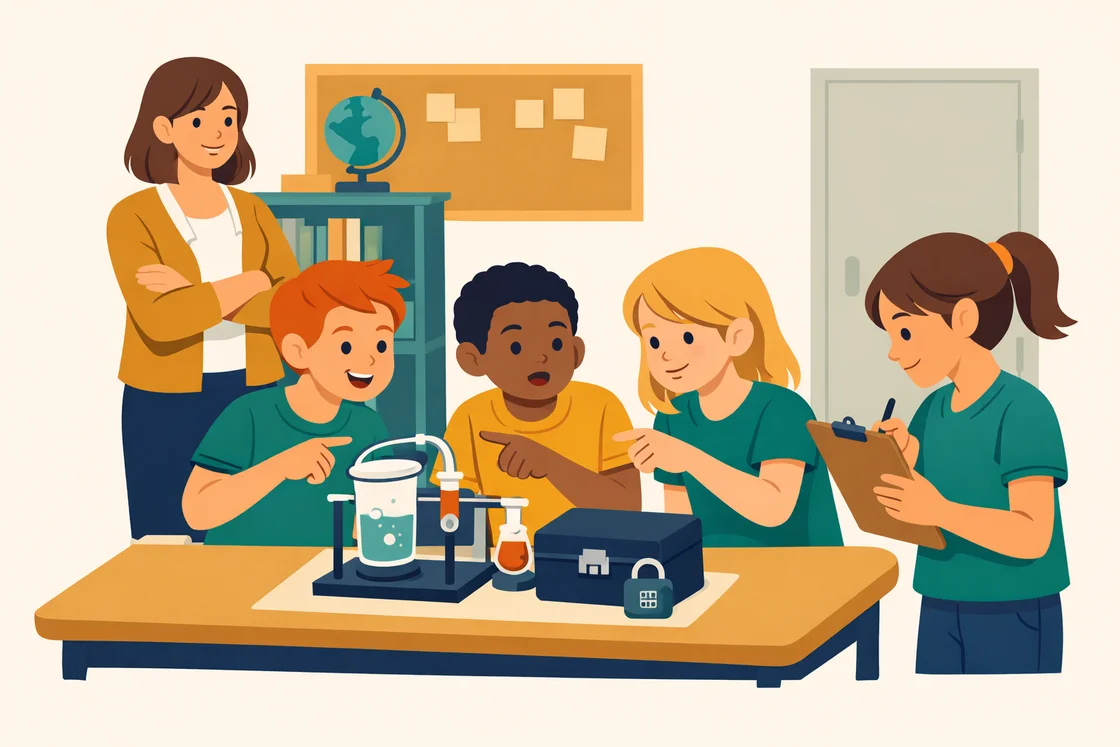
What if your assessment evidence didn’t have to be so flat? What if you could gather proof of students hypothesising, adapting, and collaborating - without inventing a mountain of extra marking? Authentic assessment isn’t a buzzword when you see a group of students light up while cracking a code or solving a puzzle that forces them to apply what they’ve learned.
Escape Rooms: Not Just for Fun
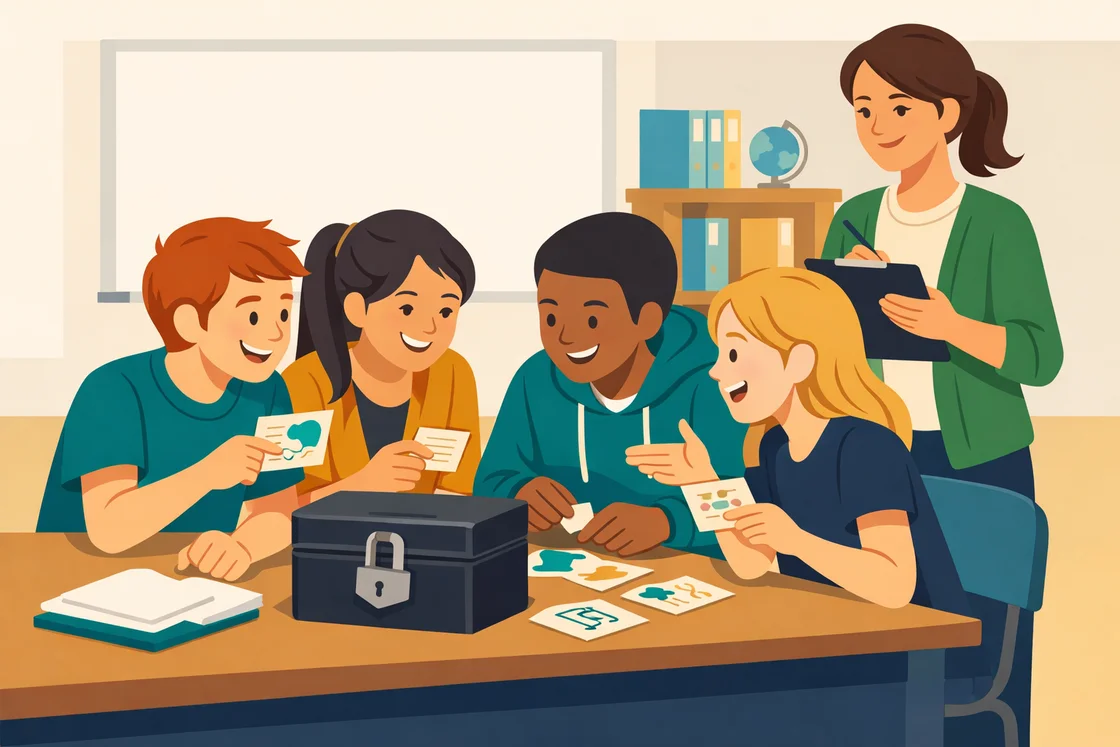
Classroom escape rooms have become more than a Friday treat or a reward for “good behaviour”. When you design them with a purpose - linking each puzzle to a step in the scientific inquiry process - they become a goldmine for capturing the kind of evidence you wish you could include in reports.
| Before: Traditional Quiz | After: Escape Room Scientific Inquiry | |
|---|---|---|
| Student Engagement | Mixed: some race ahead, others disengage or guess answers | High: students collaborate, debate, and persist to solve puzzles |
| Evidence Quality | One-word or short answers, little insight into reasoning | Verbal explanations, process documentation, teamwork negotiation |
| Skills Observed | Recall, isolated application | Critical thinking, communication, application, and perseverance |
| Teacher Insight | Limited view of thinking or misconceptions | Rich observation of group dynamics and problem-solving |
Why Escape Room Activities? A Quick Comparison
Engagement and Collaboration
Traditional assessments often end up measuring who can recall facts under pressure, rather than who can think, adapt, and work with others. In contrast, escape room activities are built around shared problem-solving. Students have to talk, reason, and challenge each other. You see who takes the lead, who spots the crucial clue, and who quietly keeps the group on task. This is the kind of dynamic evidence that rarely appears in a test score.
Assessing Real Skills
If your curriculum aims to foster scientific inquiry, engineering design, or even just plain perseverance, escape rooms allow you to observe those skills in action. And because each puzzle can be mapped to a specific step - questioning, predicting, investigating, analysing, and explaining - you can align your observations directly with your reporting requirements.
| Traditional Assessment | Escape Room Activity |
|---|---|
| Focuses on individual recall and written output | Assesses collaboration, critical thinking, and process |
| Evidence often limited to paper or digital answers | Evidence includes discussion, group decisions, and artefacts |
| Student agency is low; tasks are pre-defined | High student agency: students choose strategies and roles |
| Feedback comes after the fact | Feedback is immediate - students see what works |
Designing Your Scientific Inquiry Escape Room: Step-by-Step Guide
Step 1: Identify the Learning Outcomes and Inquiry Skills
Start with your end in mind. Are you wanting students to show they can form a hypothesis, collect and interpret data, or explain their reasoning? Choose two or three inquiry skills that matter most for your unit. This keeps your escape room purposeful rather than just “fun and games”.
Step 2: Develop Puzzles Linked to Each Step of Scientific Inquiry
For each skill, craft a puzzle or challenge that requires students to demonstrate it. For example:
- Question: Give students a mysterious set of data and ask them to generate possible questions.
- Prediction: Present a scenario and have them make predictions - then justify their reasoning to unlock the next clue.
- Investigation: Hide instructions or materials around the room; students must plan and carry out a mini-experiment to reveal a code.
- Data & Analysis: Provide raw results that must be interpreted correctly to access the final puzzle.
- Explanation/Application: The last lock could require students to connect what they’ve discovered to a real-world context.
Step 3: Build in Collaboration and Reflection Opportunities
Plan for moments where students must work together and explain their thinking. You might include:
- A group reflection sheet at the end, where they summarise how they solved each stage
- Roles within the team: leader, recorder, checker, communicator
- Bonus clues that require input from every group member
Save Hours on Report Writing
Report Alchemy generates personalised, high-quality student reports in seconds.
Try Report Alchemy FreeBringing It to Life: A Concrete Classroom Scenario
From Worksheet to Escape Room: Year 8 Chemistry in Action
Let’s return to Ms Watson’s Year 8 chemistry class. Previously, she set a worksheet on acids and bases: match the definitions, balance the equations, tick the boxes. The pile of papers told her little about who understood the difference between a strong and weak acid, or who could apply their knowledge to a real scenario.
This year, she tries something different. She creates an escape room where students must “save the school science lab” by neutralising a (fictional) spill. Each puzzle aligns with a scientific inquiry skill:
- Formulate the right question: Given mysterious clues, students must identify which substance caused the spill.
- Make predictions: They hypothesise what will happen if they add different solutions.
- Plan and conduct tests: Using safe indicators, they test samples and collect evidence.
- Analyse and explain: They decode their results to unlock the “antidote” combination.
Instead of silent worksheet completion, the room buzzes with debate, trial and error, and rapid-fire reasoning. When it comes time for reporting, Ms Watson isn’t forced to rely on test scores alone. She can point to specific moments - how Priya led the group in negotiating a disputed result, or how Callum quietly documented the whole process - and use them as genuine evidence of learning.
| Old Approach: Standard Worksheet | New Approach: Escape Room Activity | |
|---|---|---|
| Student Participation | Mostly individual, limited discussion | Active group collaboration, all students involved |
| Types of Evidence Collected | Written answers only | Reflection sheets, teacher observations, student artefacts |
| Reporting Confidence | Hesitant: “I think they get it…” | Confident: “I saw them apply, explain, and adapt” |
Capturing Authentic Evidence: What to Observe and Collect
Student Talk and Collaboration
Some of the richest evidence comes from simply listening. Note who explains their thinking, who asks clarifying questions, and who helps resolve group disagreements. These moments reveal understanding and soft skills that never surface in silent written tests.
Process Documentation and Reflection Sheets
Have each group complete a brief reflection at the end: What was your strategy? Where did you get stuck, and how did you solve it? This gives you direct insight into their reasoning, not just their results.
Teacher Observations and Student Artifacts
Jot down observations as you circulate: “Group 2 debated possible causes for five minutes before agreeing on a hypothesis”, or “Ella suggested a new testing strategy when the first one failed”. Collect any artefacts: annotated clues, group notes, or quick video snippets (if practical).
Tip: Use a simple observation checklist as you move around the room. Focus on skills like listening, reasoning, adapting strategy, and supporting peers. These notes are gold when it comes to report writing.
Reporting with Confidence: Turning Activities into Reports
Aligning Evidence with Reporting Criteria
When it’s time to write reports, you want to move beyond generic phrases. Because escape room activities are mapped to your curriculum’s inquiry skills, aligning evidence becomes straightforward. Did the student hypothesise? Did they persist when faced with a challenge? Did they explain their reasoning to others?
Sample Comments and Phrases
Instead of “X completed the chemistry unit”, you can write:
Or, for a student who finds group work challenging:
These comments do more than tick a box - they show parents and colleagues what your students can actually do. They’re also exactly the kind of personalised language Report Alchemy can help you generate, freeing you from staring at a blank screen long after the school day ends.
Next Steps: Try, Adapt, Reflect
Start Small and Iterate
You don’t need to overhaul your entire curriculum overnight. Start with a single lesson or topic that feels “stuck” in the old model. Choose one inquiry skill, design a puzzle around it, and see how your students respond. Gather evidence as you go, and tweak the activity for next time.
Share Your Successes and Learnings
Talk to colleagues about what worked - and what didn’t. Share templates, puzzles, and observation strategies. The more you exchange ideas, the easier it gets to build a bank of authentic assessments that actually mean something.
Remember, the goal isn’t to add more work to your plate. It’s to make the evidence you already see in your classroom count - so when you open Report Alchemy to write your next batch of reports, you have a treasure trove of genuine, specific moments to draw upon.
This article was inspired by recent reporting from eSchool News.