
A parent email lands with a thud in your inbox. It's 11pm. The subject line: “Re: End of Year Report for Ollie.” There’s a screenshot of your comment, three highlighted sentences, and a list of questions that seem to multiply every time you blink. You wrote those reports honestly, squeezing them in between marking and the after-school club. Now, with every reply, you feel like you’re on trial for knowing your own pupil.
When Parental Disputes Turn Personal: The Everyday Pressure
The Email That Lands at 11pm
Maybe it’s Year 3, maybe Year 10. Either way, you know the drill: a parent challenges your judgement, quoting your own words back at you. Sometimes it’s a polite request for clarification. Other times, it’s an accusation that you “haven’t truly understood” their child. In the last year, more than 90% of headteachers and senior leaders have reported “challenging behaviour” from parents. For most teachers, this isn’t a statistic, it’s a Tuesday.

Feeling Exposed: When Reports Are Picked Apart
There’s nothing quite like seeing your carefully chosen phrases dissected line by line, either in a meeting or (worse) on social media. Over half of school leaders have experienced hostile or defamatory comments from parents online. The pressure is real: you want to capture a pupil’s progress and personality, but you also know every word could be scrutinised, misinterpreted, or even used in a formal complaint.
Real-Life Scenario: The Parent-Teacher Meeting That Went Sideways
You remember the meeting. The parent arrives with a printout of your report. “You wrote, ‘Lucy sometimes struggles to stay focused.’ Can you give me three concrete examples?” You shuffle through your notes, wishing you’d written something firmer, something that couldn’t be picked apart. You’re not alone: 73% of leaders say parents are now using subject access requests in challenging or excessive ways, sometimes seeking every written note you have. The conversation shifts from Lucy’s learning to your professional judgement. It feels less like a partnership, more like a cross-examination.

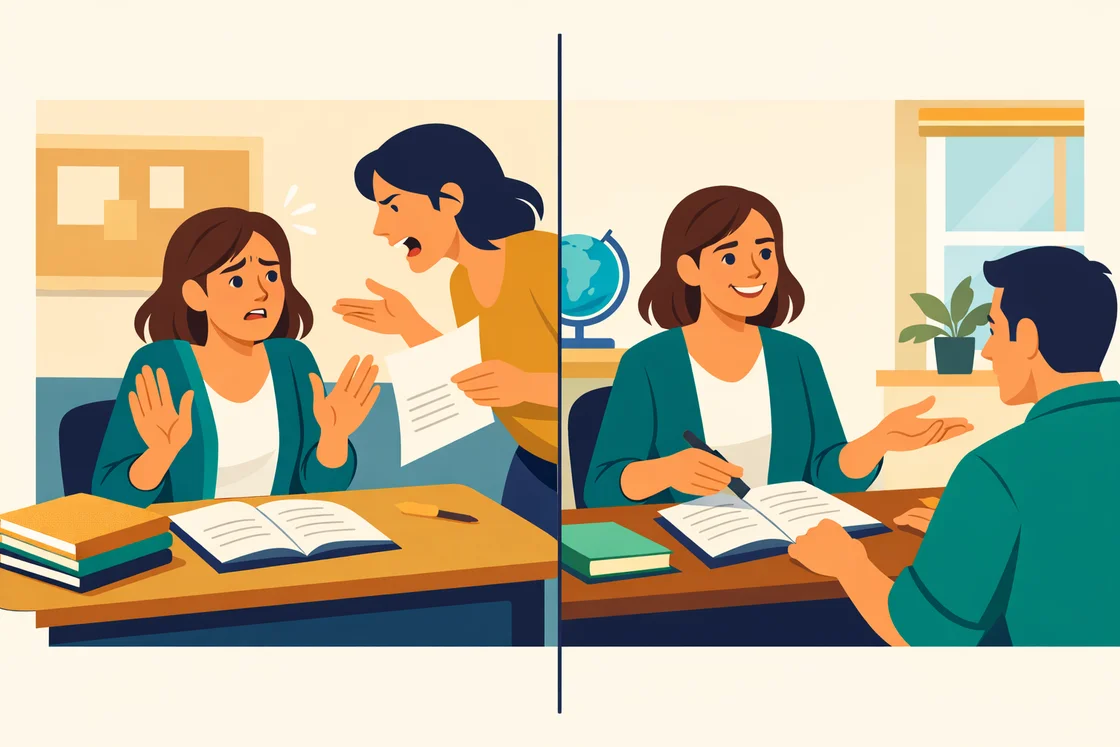
Imagining a Different Outcome: The Power of Robust, Evidence-Based Reports
Turning the Tables: From Defensive to Confident
Imagine reading that late-night email and feeling calm instead of cornered. You know your reports are watertight, grounded in real, observable evidence. When challenged, you can point to facts, not hunches. Suddenly, you’re not defending your professionalism - you’re demonstrating it.
Before/After Example: Vague vs. Evidence-Backed Comments
What does this look like in practice? Here’s a comparison of two comments for the same student:
| Vague Comment | Evidence-Based Comment |
|---|---|
|
“Ryan needs to try harder in science. He can be distracted.”
|
“Ryan completed 3 out of 5 practical tasks in our ‘Forces’ unit without support, but was off-task during group experiments, as noted in lessons on 14th and 21st May. When prompted, he was able to refocus and contribute accurate predictions.”
|
When a parent reads the second comment, it’s clear you’re not making a snap judgement. You’ve got evidence. That’s the difference between feeling exposed and feeling prepared.
Save Hours on Report Writing
Report Alchemy generates personalised, high-quality student reports in seconds.
Try Report Alchemy FreeStep 1: Stick to Observable Facts, Not Interpretations
What Counts as Evidence?
It’s easy to slip into language that sounds true but isn’t rooted in observable behaviour. “Often disengaged,” “quite capable,” or “lacks motivation” are all phrases that feel safe but are hard to defend if challenged. Instead, focus on what you actually saw, heard, or marked.
- Specific work completed (“produced a persuasive letter using three key arguments”)
- Participation (“answered questions in four out of five geography lessons this half-term”)
- Concrete incidents (“struggled to stay seated during group reading on 2nd and 8th June”)
- Progress with evidence (“moved from Level 3 to Level 4 in spelling assessments since March”)
Phrases to Avoid vs. What to Say Instead
| Phrases to Avoid | What to Say Instead |
|---|---|
|
“Needs to pay more attention.”
|
“Required reminders to begin independent work in maths lessons on 5th and 12th June.”
|
|
“Very capable, but can be lazy.”
|
“Completed all science homework to a high standard, but did not submit the project due on 26th May.”
|
Step 2: Use Clear, Specific Language
Structuring Sentences for Clarity
Long, convoluted sentences make comments harder to interpret - and easier to challenge. Stick to one idea per sentence, rooted in something you can show or explain.
- Start with the evidence: “In group tasks...” “On the spelling test...” “During the debate on renewable energy...”
- State the behaviour or achievement: “...she contributed two well-reasoned points.” “...he completed all questions accurately.”
- Optional: Add the impact or next step: “This shows growing confidence.” “He would benefit from practising problem-solving at home.”
Sample Comments You Can Adapt
-
“Sana read aloud confidently in every English lesson this term and volunteered to lead her group’s presentation.”
-
“During our fractions unit, Marcus completed all tasks independently and helped a peer understand equivalent fractions.”
-
“On three occasions (7th, 14th, and 21st May), Olive needed reminders to stay focused during silent reading.”
Tip: Before finalising a report, check: Could another teacher understand exactly what happened? Is there a date, number, or specific example? If not, make it more concrete.
Step 3: Keep a Professional, Neutral Tone - even Under Pressure
How to Avoid Emotional Language
When you’re frustrated or under scrutiny, it’s tempting to include little digs or defend yourself in comments. Don’t. Emotional or defensive language gives parents something to push against. Instead, keep it calm, factual, and focused on the pupil’s learning.
- Avoid: “Despite my efforts, Jamie refuses to try.”
- Use: “Jamie declined to participate in group work during lessons on 10th and 17th May.”
- Avoid: “It’s not fair to say she’s behind, as she’s had absences.”
- Use: “Her attendance this term was 85%, and she missed sessions on 4th, 11th, and 25th June, which affected her progress in the poetry unit.”
Templates for Difficult Situations
-
“During class discussions, Adam has shared thoughtful ideas but is sometimes reluctant to contribute without prompting.”
-
“Work was not submitted on the agreed date. Adam has been given opportunities to complete the task during lunchtime sessions.”
-
“I have communicated concerns about missing homework via email on 2nd and 9th May.”
If you’re ever unsure, ask: Would this comment still make sense if read in a meeting with a parent, a colleague, or a school leader? If yes, you’re on safe ground.
Step 4: Document, Document, Document
Simple Ways to Track Evidence Daily
You don’t need to write a novel every day. Small, regular notes - dates, incidents, achievements - are enough. Use a spreadsheet, a notebook, or a tool like Report Alchemy to log quick evidence as you go. Even a weekly bullet point per pupil can make all the difference when you’re asked to “prove” something.
- Record notable incidents as soon as possible: “12th June: Reuben completed all tasks independently.”
- Keep copies of significant emails to or from parents (especially about support or behaviour).
- Save key assessment data: scores, levels, or teacher judgements.
What to Keep (and for How Long)
Check your school’s policies, but as a rule, keep:
- Notes supporting end-of-year reports until the following academic year is complete.
- Records related to safeguarding or ongoing concerns as required by policy.
- Any written communications about disputes or complaints for at least 12 months.
Having this evidence isn’t just about defending yourself. It also means you can write reports quickly, confidently, and with less stress. Tools like Report Alchemy can make gathering and organising this evidence much less of a headache.
Step 5: Look After Your Own Wellbeing
When to Loop In Leadership or Safeguarding
You’re not expected to handle everything solo. If a parent’s behaviour crosses the line - verbal abuse, threats, or persistent complaints - alert your line manager or safeguarding lead. More than 60% of school leaders have faced verbal abuse and threats from parents in the past year. Don’t wait until you’re overwhelmed: early intervention can prevent escalation.
Practical Strategies for Managing Stress
- Set boundaries with your email - don’t reply to late-night messages. Schedule a reply for working hours.
- Debrief with a colleague after a tough meeting. Sometimes just sharing the frustration helps.
- Remember, report-writing is only one part of your job. If it’s eating into your evenings and weekends, look for tools or templates (like those in Report Alchemy) that can take the load off.
- Celebrate what’s going well. Keep a “positive feedback” file from parents, pupils, or colleagues to remind yourself that most interactions are constructive.
Tip: Burnout is real. If you’re feeling the strain, talk to your line manager, union, or a trusted colleague. Your wellbeing matters as much as your professionalism.
Conclusion: Turning Pressure into Professional Confidence
Summary of Steps
- Ground your comments in observable, specific evidence.
- Use clear, unambiguous language that’s easy to stand by.
- Maintain a neutral, professional tone - no matter the pressure.
- Document as you go, not just when a complaint lands.
- Protect your own wellbeing as fiercely as you protect your professionalism.
Your Next Action: Make Evidence Your Ally
Next time you sit down to write reports - whether it’s for a boisterous Year 7 class or a diligent Year 2 group - pause before typing. Ask: What do I actually know? What can I show? With evidence-based writing, you’re not just covering yourself. You’re modelling what it means to teach with integrity, even when the pressure is on. And if you want a shortcut to doing this well (and fast), Report Alchemy is there to help.
Teaching is complicated. Report writing doesn’t have to be.
This article was inspired by recent reporting from The Guardian.