
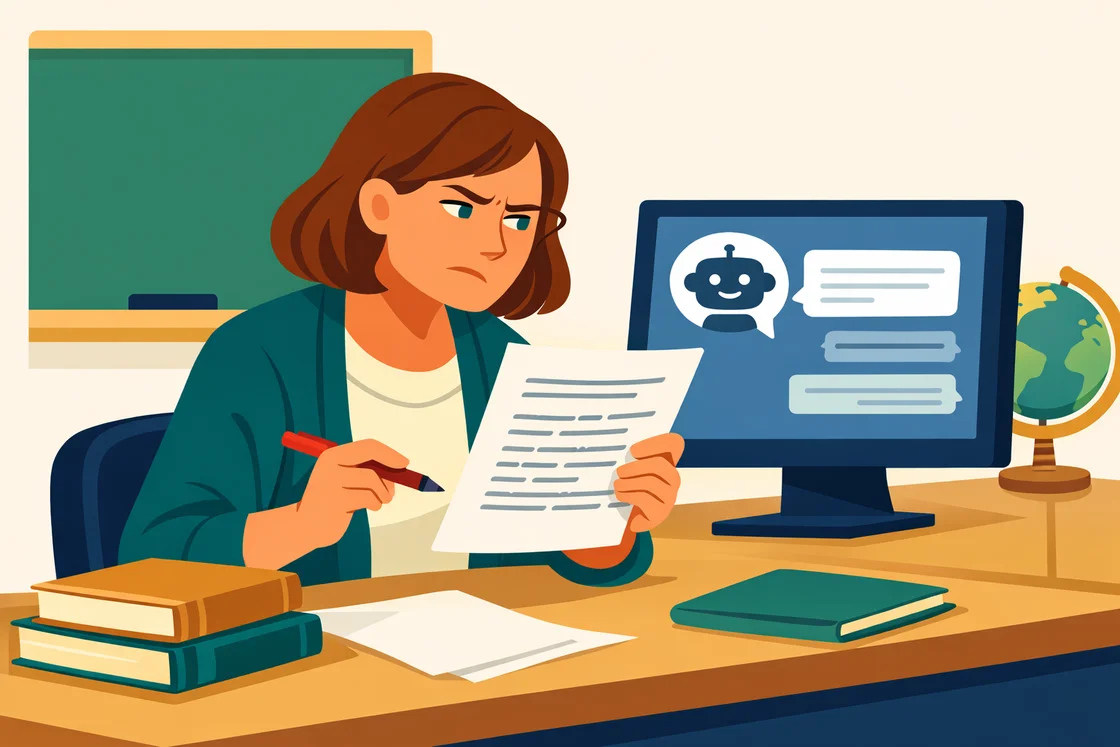
You read the essay. A flawless analysis of “Romeo and Juliet.” Then you spot it: that oddly formal phrasing, the uncanny coherence. Deep down, you know no amount of your feedback will ever reach the real writer - because the real writer is an AI. And yet, it is your name on the report, your professional judgement on the line. How do you show what this student actually knows when the final product is a ghostly veneer? Welcome to assessment in the era of AI, where the old rules no longer fit, and the chase for authenticity can feel endless.
When the Final Product Isn’t Really Theirs
A Familiar Frustration: Spotting AI in Student Work
It starts with a line that’s just too polished, or a Year 10 pupil who suddenly writes like a university graduate. You find yourself rereading, suspicious, scanning for signs of AI. There’s always that flicker of hope - maybe this time it’s real? But time and again, the evidence mounts: the vocabulary, the structure, even the citation style. You’re not just marking essays now. You’re playing detective, parsing out what’s genuinely theirs and what’s been conjured up by the latest chatbot.
The Pressure Cooker: Balancing Integrity and Progress
Meanwhile, the deadlines stack up. Colleagues swap stories in the staffroom - “I spent an hour on Turnitin last night and still wasn’t sure.” You want to honour students’ progress, but how can you, when you’re not sure whose work you’re actually seeing? Policing AI can feel like a losing battle. But the alternative - letting it slide - feels like giving up on what matters most: authentic learning.
Imagining Assessment That Values the Journey
What If We Could See Every Step?
Here’s a question that changes everything: What if we stopped obsessing over the final product, and started valuing the steps that lead there? Instead of catching out AI, what if we made the learning process itself the centrepiece of assessment? Imagine reports that don’t just summarise a grade, but tell the real story of a student’s thinking, attempts, failures, and growth.
Case Study: Before/After Example
Before: In a traditional assessment, Sophie submits a polished research project on the water cycle. It’s neat, referenced, and suspiciously perfect. The only evidence you have is her final document. You spend your marking time wondering how much is actually hers.
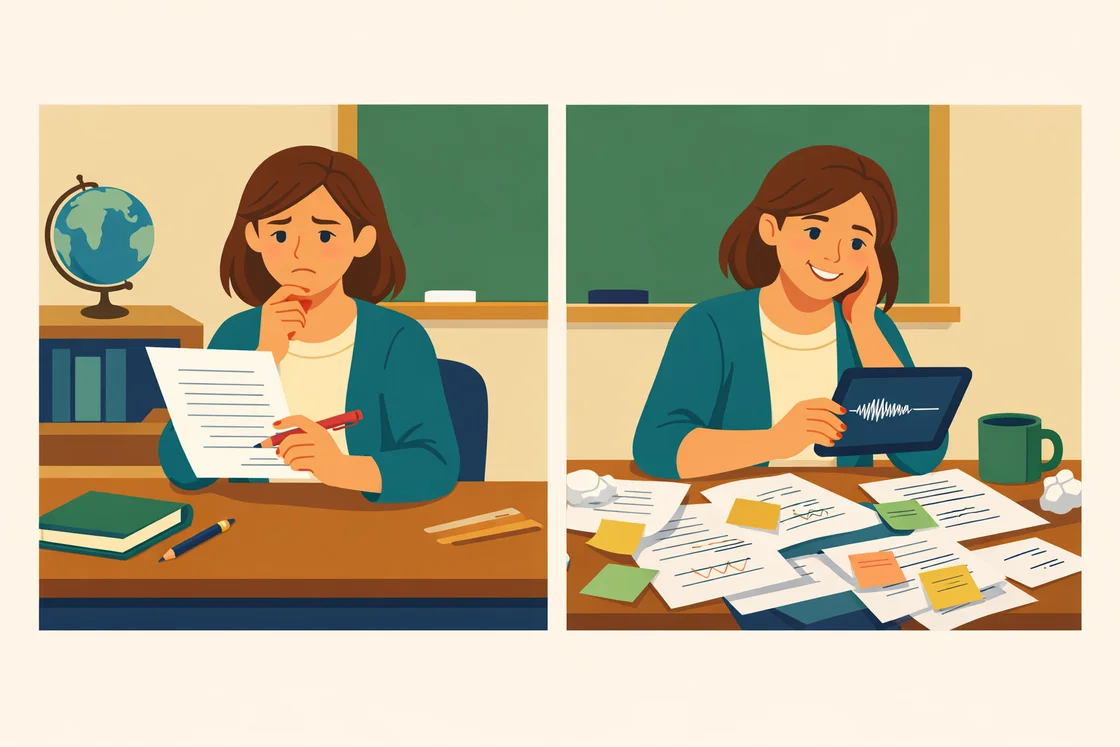
After: With process-based assessment, Sophie submits her initial brainstorm, a voice note explaining her first ideas, two messy drafts, and a short reflection on what she found hardest. You give feedback at each stage. By the time the final project arrives, her journey is visible - and your report can celebrate the real learning you witnessed along the way.
Step 1: Map Out the Process, Not Just the Outcome
Identifying Key Steps in Your Subject
Every subject has its own unique journey from blank page to finished piece. In English, it might be brainstorming, planning, drafting, revising, and reflecting. In maths, perhaps it’s exploring strategies, trying problems, making errors, and explaining reasoning. The first step is to break down your subject’s learning process into visible, assessable steps. This isn’t about adding more work - it’s about making the invisible visible.
Sample Process Checklist

- Initial ideas or mind map
- First draft (handwritten or digital)
- Peer or self-assessment notes
- Teacher feedback (in person, comment, or audio)
- Final version with reflection
Even a simple checklist like this transforms how you and your students think about “what counts.” Instead of rewarding polish, you’re recognising effort, revision, and real thought.
Step 2: Collect Evidence Along the Way
Using Journals, Drafts, and Voice Notes
No one has time to collect piles of extra paperwork. Process evidence can be quick, informal, and even a bit scrappy. Some pupils jot reflections in a learning journal. Others snap a photo of their draft on their phone, or record a 30-second voice note explaining a change they made. The key is to create regular touchpoints - moments where you can see (and hear) their thinking unfold.
Save Hours on Report Writing
Report Alchemy generates personalised, high-quality student reports in seconds.
Try Report Alchemy FreeQuick Digital Tools for Process Capture
- Voice notes: Use free apps on school iPads or phones for students to explain their thinking.
- Photo evidence: Snapshots of whiteboards, notebooks, or working walls.
- Online folders: Google Drive, OneDrive, or school VLEs can store drafts and reflections in one place.
- Learning logs: Short weekly entries, digital or paper, describing what they did and why.
Tip: Even a 30-second phone recording or photo of a draft can count as process evidence.
Step 3: Shift Your Feedback and Reporting
From ‘Finished Piece’ to ‘Growth Narrative’
Here’s where the real magic happens. When you have evidence of the process, your feedback shifts from “Well done, 7/10” to a story of learning. Reports become more than a judgement - they become a record of progress, resilience, and problem-solving. This isn’t just more satisfying for you. It’s also what parents crave: a glimpse into who their child is as a learner, not just a single grade.
Example Comments: Product-Focused vs. Process-Based
| Traditional Product-Based Comment | Process-Based Comment |
|---|---|
|
“Joshua produced a well-structured essay and demonstrated good understanding of the main themes.”
|
“Joshua’s initial draft showed some confusion with theme analysis, but after reflecting on feedback and discussing his ideas aloud, he revised his argument to show a much clearer understanding. He persisted through early difficulties, and his confidence in independent thinking has grown.”
|
|
“Ella’s science project was detailed and accurate.”
|
“Ella documented her experiment with photos and voice notes, explaining her reasoning at each stage. She responded thoughtfully to feedback and improved her method. Her project shows not just accuracy but also a genuine curiosity.”
|
The relief? With process evidence, you’re not left guessing - you can write reports that truly reflect what you saw. Tools like Report Alchemy can turn these growth stories into personalised comments in seconds, saving hours and making each report feel genuinely tailored.
Step 4: Set Clear Expectations with Students (and Parents)
Launching the New Approach
Change works best when everyone knows what’s changing. At the start of a unit or term, explain to students (and parents) how process-based assessment works. Be honest: “With AI tools everywhere, we’re focusing on how you learn, not just what you hand in.” Emphasise that documenting their journey is now part of their grade. This doesn’t just deter shortcutting. It also empowers the many pupils who struggle with polished writing, but thrive in discussion or reflection.
Sample Communication Templates
- To Students: “This term, you’ll be asked to show your learning in different ways - drafts, voice notes, reflections. Your final mark will recognise your effort and progress, not just the finished product.”
- To Parents: “You may notice your child submitting work in stages. This helps us see and support their growth, and ensures results genuinely reflect their learning.”
Step 5: Safeguard Integrity Without Policing
Spotting Authentic Process Over AI Shortcutting
AI isn’t going away, and neither is the temptation to cut corners. But when students need to submit process evidence - messy drafts, voice reflections, peer feedback - it’s far harder to fake. You can hear genuine struggle and see the evolution of ideas. Instead of spending hours hunting for AI, you’re building an environment where authentic effort is visible and valued.
Reframing Academic Honesty Policies
The best honesty policies are clear, realistic, and positive. Rather than simply banning AI, focus on transparency: “If you use AI to help brainstorm or check spelling, that’s fine - just note it in your reflection.” Make it clear that the process matters. If students know their steps are being looked at, the incentive to shortcut with AI drops - and the incentive to think for themselves rises.
Conclusion: The Relief of Real Progress
What Teachers Say After the Switch
Ask any teacher who’s tried process-based assessment: the difference is palpable. Reports become stories, not just scores. The frustration of guessing at authenticity fades. You start to spot those real “aha” moments - the times when a quiet pupil finally explains their thinking, or a reluctant writer grows in confidence through voice notes and peer feedback. You spend less time policing and more time teaching.
Next Steps: Start Small, Start Now
This isn’t about overhauling everything overnight. Pick one class, one assignment, or even just one new way of collecting process evidence. Draft a new kind of report comment focused on growth. Share it at your next department meeting. And when you’re ready to turn those stories into professional, detailed reports - without spending your evenings glued to the keyboard - tools like Report Alchemy are there to help.
No system is perfect. But when you start valuing the journey as much as the outcome, you don’t just sidestep the AI arms race. You rediscover what drew most of us to teaching in the first place: helping students grow, learn, and think for themselves.
This article was inspired by recent reporting from eSchool News.